KinderCalculus by Klarisse

Our goal is to teach kids Algebra and Calculus in the K-6 grades. This is our laser focus. A 7-year long proof-of-concept has been completed with 2 children. Next, we are widening towards a pilot study.
Our Strategy
| Arithmetic | Lighten up on arithmetic by keeping division under 3-digits -- this is a small loss. |
| Algebra | Rather than drilling arithmetic, we drill algebra. Manipulating equations can become automatic. If children can perform arithmetic at an automatic level, so too can they do algebra. We place emphasis on concepts and intuition of transcendental functions. |
| Calculus | Use infinitesimals as a viable alternative to the famously hard ε-δ proofs. |
| Advanced Topics | To keep kids engaged, we use algebra and calculus to explore some of humanity's crowning achievements such as infinity, relativity, and artificial intelligence. |
Contributions
To date, we have shown that 2 normal children can learn high school level Calculus and other advanced topics in elementary school with ~2.3 hours/week of tutoring. Although the 2 children had regular math instructions in school, they were ahead of their peers by the 1st grade such that school hardly taught them any new materials. However, schools did provide valuable time for review, practicing arithmetic, learning probability and reading data tables.
Future Work
We realize that 2 hours/week of 1-on-1 tutoring is a luxury that many parents cannot afford, so we are building a platform to offer assistance. The platform consist of video lessons, exercises, and 2 software modules: Miyagi Math and Freeciv.
Miyagi Math
One unexpected difficulty in teaching a 6-year old algebra is the distraction of penmanship. At that age, writing is not yet second nature to children, so they spend substantive cognitive load on handwriting to copy equations from one step to the next. This distracts from the mathematics. Coax minimizes the handwriting work in solving equations and uses AI to read handwriting and offer a tutor's feedback.
Freeciv
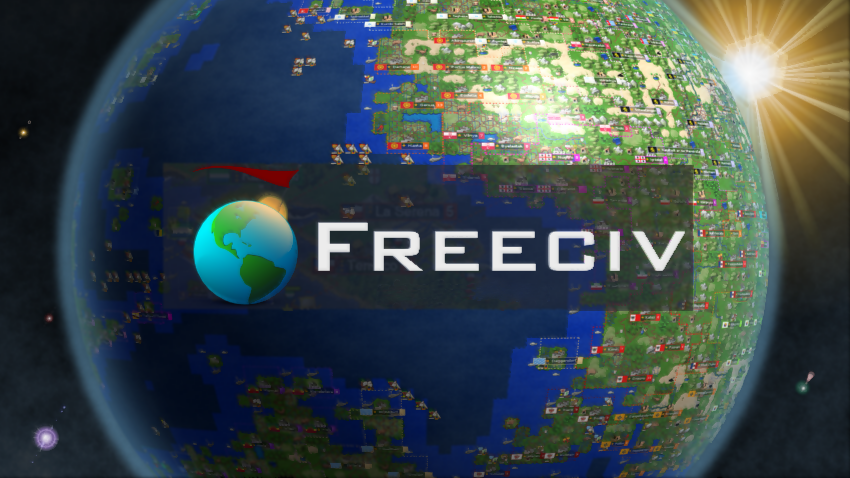
To make math fun we will modify Freeciv, an open source version of the Civilization building game that has been popular for 35 years now. It is a strategy game where students can win by acquiring technology points to fly into space. We intend to weave math lessons into Freeciv, allowing technology points to be earned from math exercises. This approach is different because we are taking a proven game and adding math, instead of building an edutainment math game.